
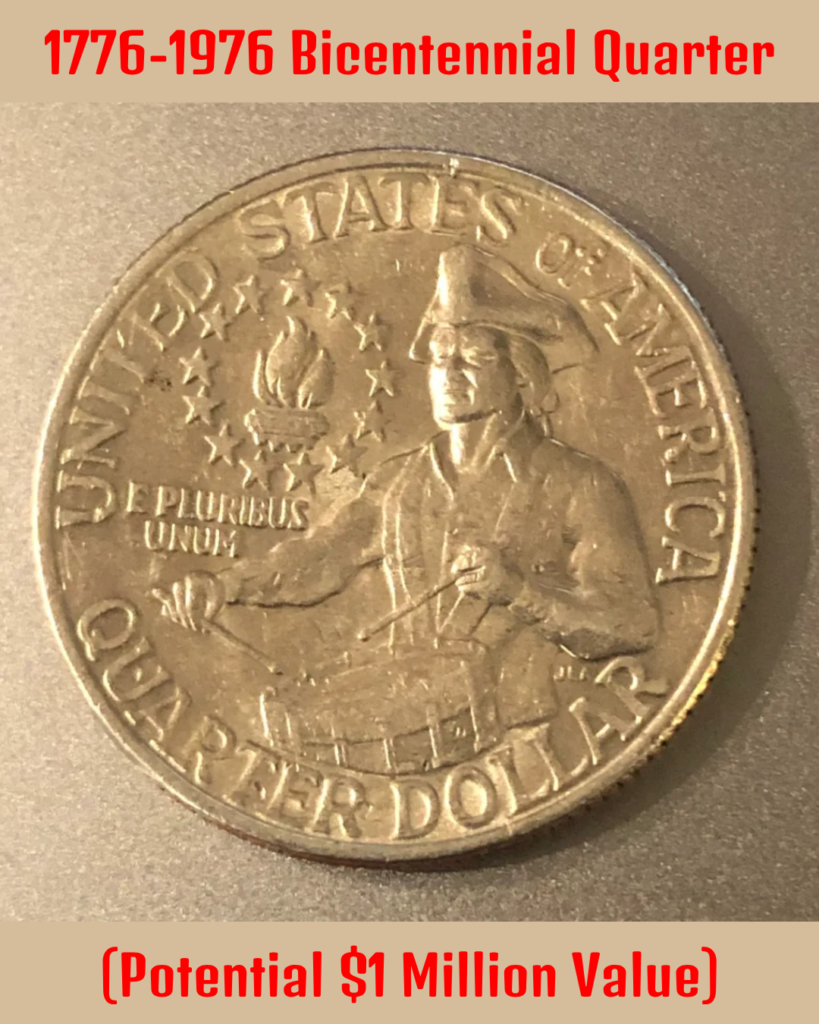
🧲 Viral Coin Myth or Real Million-Dollar Treasure?
You’ve probably seen it online…
👉 “This Bicentennial Quarter is worth $1,000,000!” 😱
Videos on social media make it look easy to get rich overnight. But is it true?
Let’s break down the real facts vs internet hype—and show you exactly how to evaluate your coin like a professional.
⚡ Quick Facts (Don’t Skip This)
✔️ No mint mark = Normal Philadelphia coin
✔️ Most coins value = $0.25 to $3
❌ No verified $1,000,000 sale exists
🔍 Only rare, authenticated errors have real value
🖼️ Bicentennial Quarter Reference Examples
🏛 Why “No Mint Mark” Confuses So Many People
The 1776–1976 Bicentennial Quarter was produced in huge numbers at three mints:
- Philadelphia → No mint mark
- Denver → “D”
- San Francisco → “S”
👉 Here’s the key truth:
No mint mark does NOT mean rare.
At that time, Philadelphia coins were supposed to have no mint mark.
🔎 Step-by-Step: How to Check Your Bicentennial Quarter
Follow this checklist before believing any viral claim 👇
1️⃣ Check the Mint Mark Location
📍 Found under Washington’s ponytail
- No mark → Normal coin
- Looks scratched → Likely damaged
- Truly missing from die → Extremely rare (needs verification)
⚠️ Many fake “errors” are just altered coins.
2️⃣ Weigh Your Coin Precisely
Use a digital scale (0.01g accuracy):
- Normal clad: 5.67g
- 40% silver: ~5.75g
👉 If weight is off:
- Could be damaged
- Could be fake
- Not automatically valuable
3️⃣ Inspect the Edge
This is one of the easiest checks:
- 🟤 Copper stripe → Standard coin
- ⚪ Solid silver → 40% silver version
4️⃣ Use Magnification (10x–20x)
Professional collectors always zoom in 🔍
Look for:
- Tool marks
- Mint mark removal
- Weak vs real errors
- Filled dies (common, low value)
👉 If it looks tampered with, value drops fast.
5️⃣ Compare With Verified Sources
Always verify with real databases:
- PCGS PhotoGrading
- NGC Variety Database
- Heritage Auctions
- Stack’s Bowers
- GreatCollections
👉 If your coin doesn’t match a known variety, it’s likely common.
💵 Real Market Value (No Hype)
🪙 Common Coins
👉 $0.25 – $3
Most Bicentennial quarters fall here.
💎 Rare & Verified Coins
👉 $20 – $3,000+
Only if:
- Professionally graded
- High condition (MS67+)
- Confirmed mint error
🚫 The Truth About the $1,000,000 Claim
Let’s be direct:
❌ No confirmed auction sale at $1,000,000
❌ No certified example by major grading companies
❌ No record from top auction houses
👉 Conclusion: It’s internet hype—not reality (for now).
🚨 Warning Signs of Coin Scams
Watch out for:
⚠️ “Only a few exist!” without proof
⚠️ Coins with removed mint marks
⚠️ Unrealistic marketplace prices
⚠️ Videos with no references
👉 In coin collecting, authentication = everything
🛡 Found Something Interesting? Do This First
If you think your coin is rare:
1️⃣ Don’t clean it 🚫
2️⃣ Take clear photos (front, back, edge)
3️⃣ Record weight and size
4️⃣ Send to professional grading:
- PCGS
- NGC
If verified, consider selling through:
- Heritage Auctions
- Stack’s Bowers
- GreatCollections
🎓 Why Experts Stay Skeptical
True rare coins:
✔️ Are well documented
✔️ Have certification
✔️ Have auction history
Bicentennial quarters were made in huge quantities, so standard coins are very common.
👉 Extraordinary claims need real proof.
🏆 Reality Check for Smart Collectors
Yes—valuable Bicentennial quarters exist.
But a simple “no mint mark” coin is NOT rare.
👉 The real value comes from:
- Verified mint errors
- High condition
- Professional grading
🚀 Collector’s Reality Insight
Don’t rely on viral videos—rely on facts and verification.
Smart collectors:
✔️ Research first
✔️ Authenticate before selling
✔️ Avoid hype
🪙✨ That’s how you turn knowledge into real profit.
Leave a Reply