
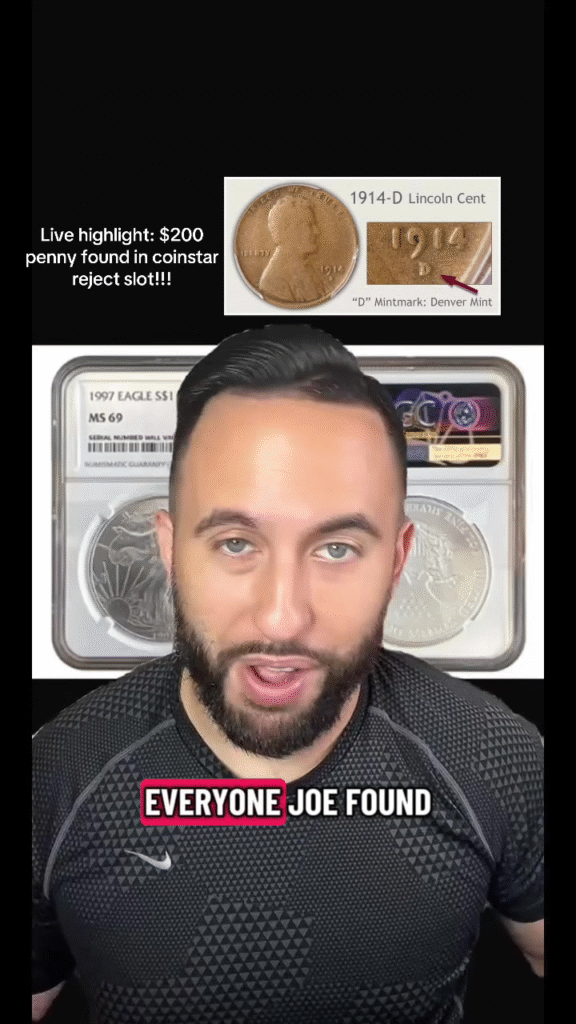
💰 1914-D Lincoln Wheat
🪙 Could a penny in Your Pocket Be Worth Thousands of Dollars?
Most people wouldn’t think twice about an old penny. But the 1914-D Lincoln Wheat Penny is one of the rarest and most sought-after Lincoln cents ever produced by the U.S. Mint.
Collectors are always searching through pocket change, coin jars, estate collections, and even Coinstar reject trays because valuable coins occasionally turn up in unexpected places.
While discoveries are uncommon, they remind collectors that hidden treasures can still be found.
📚 In This Guide, You’ll Learn
✅ Why the 1914-D Lincoln Wheat Penny is so valuable
✅ How to identify an authentic example
✅ Estimated values based on condition
✅ Where collectors still search for rare coins
Let’s dive in! 🚀
🔎 Why Is the 1914-D Lincoln Wheat Penny So Valuable?
The 1914-D Lincoln Wheat Penny was struck at the Denver Mint during the early years of the Lincoln cent series.
Because only a relatively small number were produced—and many entered circulation—high-quality examples are especially difficult to find today.
📋 Quick Facts
🗓️ Year: 1914
🏛️ Mint: Denver (D)
🪙 Coin Type: Lincoln Wheat Penny
🔢 Original Mintage: Approximately 1.19 million
⭐ Collector Status: One of the key dates in the Lincoln Wheat Cent series
💎 What Makes This Penny So Desirable?
Several factors contribute to its popularity among collectors.
⭐ Key Reasons
✔️ Low original mintage
✔️ Heavy circulation over many decades
✔️ Strong demand from Lincoln cent collectors
✔️ Difficult to find in high Mint State grades
Because of these factors, genuine 1914-D cents often command substantial premiums.
💰 How Much Is a 1914-D Lincoln Wheat Penny Worth?
The value depends heavily on authenticity, condition, and professional grading.
| Condition | Estimated Value* |
|---|---|
| Well Worn | $200–$500 |
| Fine to Very Fine | $800–$3,000 |
| Extremely Fine to About Uncirculated | $3,000–$5,000 |
| High Mint State Examples | $5,000–$10,000+ |
*Actual market prices vary based on grade, eye appeal, rarity, and collector demand. Exceptional certified coins may sell for significantly more.
🔍 How to Identify a Genuine 1914-D Penny
Before getting excited, inspect the coin carefully.
✅ Look For
📅 Date: 1914
🏛️ Small “D” mint mark below the date
🌾 Wheat ears on the reverse
🟤 Original surfaces without signs of harsh cleaning
⚠️ Because this is a valuable coin, altered dates and counterfeit examples exist. Professional authentication is highly recommended.
🪙 Where Do Collectors Search for Rare Pennies?
Rare coins can occasionally appear in unexpected places.
Popular hunting spots include:
🏦 Coin rolls from banks
🫙 Old coin jars
👴 Family collections
🏠 Estate sales
💰 Coinstar reject trays
🛒 Flea markets and antique stores
Although finds are uncommon, experienced collectors know that checking these places can sometimes lead to exciting discoveries.
💡 Tips for Coin Hunting Success
Follow these simple habits whenever you search for old coins.
✅ Step 1
Check dates carefully.
Lincoln Wheat Pennies were minted between 1909 and 1958.
✅ Step 2
Look for the mint mark.
The 1914-D has a small D beneath the date.
✅ Step 3
Use a magnifying glass.
Small details can make a huge difference.
✅ Step 4
Never clean your coin.
Cleaning may permanently reduce its value.
✅ Step 5
Store valuable finds safely.
Use protective holders or coin capsules.
✅ Step 6
Have rare coins authenticated.
Professional grading by PCGS or NGC helps confirm authenticity and market value.
🏆 Final Thoughts
The 1914-D Lincoln Wheat Penny remains one of the most desirable coins in the Lincoln cent series. Thanks to its low mintage and strong collector demand, even well-circulated examples can be worth hundreds of dollars, while exceptional certified coins may reach several thousand dollars at auction.
Whether you’re searching through pocket change, inherited collections, or a Coinstar reject tray, it always pays to look closely. Your next discovery could be a remarkable piece of American numismatic history.
Happy coin hunting! 🪙✨
Leave a Reply