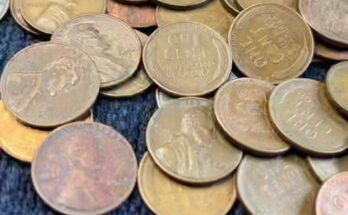
Is a 1776–1976 Bicentennial Quarter with no mint mark really worth $1,000,000? Discover the facts, learn how to identify valuable Bicentennial quarters, and avoid common online scams.
🪙 Is There Really a $1 Million Bicentennial Quarter?
If you’ve spent any time on YouTube, TikTok, or Facebook, you’ve probably seen headlines claiming that a 1776–1976 Bicentennial Quarter with no mint mark is worth $1,000,000.
It certainly grabs attention…
But is it actually true?
The short answer is No—not based on any verified public auction records.
Let’s separate fact from fiction and show you exactly what makes a Bicentennial Quarter valuable.
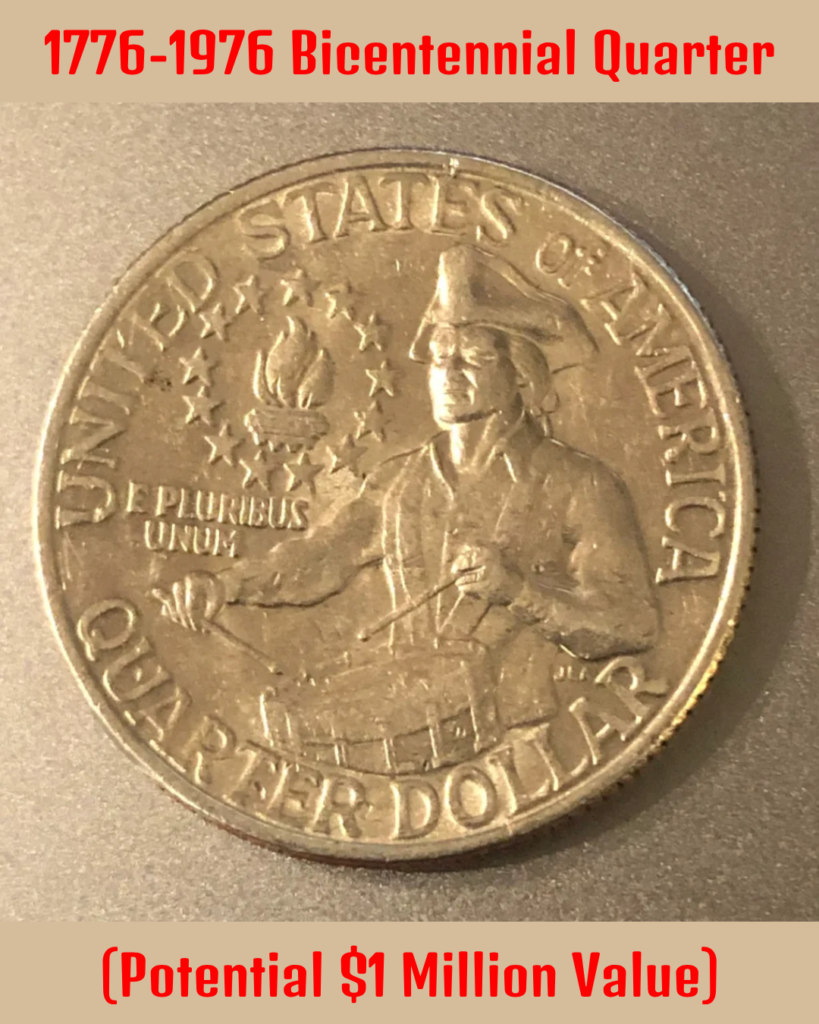
⚡ Quick Facts
Before you inspect your coins, here’s what you need to know.
✅ No mint mark = Usually struck in Philadelphia
✅ Most circulated Bicentennial Quarters are worth 25 cents to a few dollars
✅ Rare mint errors and high-grade coins can be worth significantly more
❌ There is no confirmed public sale of a no-mint-mark Bicentennial Quarter for $1,000,000
🏛 Why “No Mint Mark” Does NOT Mean Rare
Many collectors are surprised to learn that Philadelphia coins normally did not carry a mint mark during this period.
The Bicentennial Quarter was produced at three U.S. Mints:
🪙 No Mint Mark = Philadelphia
🪙 D = Denver
🪙 S = San Francisco
That means a quarter without a mint mark is usually completely normal, not a rare error.
🔍 Step-by-Step Guide to Check Your Bicentennial Quarter
✅ Step 1: Find the Mint Mark
Look on the front (obverse) of the coin under George Washington’s ponytail.
You may find:
✔️ No mint mark (Philadelphia)
✔️ D (Denver)
✔️ S (San Francisco)
⚠️ Be careful—some altered coins have had mint marks removed to trick buyers.
✅ Step 2: Weigh the Coin
A digital scale can reveal useful information.
Typical weights include:
🪙 Copper-Nickel Clad Quarter: About 5.67 grams
🪙 40% Silver Bicentennial Quarter: About 5.75 grams
An unusual weight alone does not prove a coin is valuable, but it may indicate damage, alteration, or an unusual strike.
✅ Step 3: Examine the Edge
The edge tells you a lot.
🟤 Visible copper stripe = Standard clad quarter
⚪ Solid silver-colored edge = 40% silver version
This is one of the quickest ways to distinguish between common and silver examples.
✅ Step 4: Inspect for Genuine Mint Errors
Use a 10× magnifying glass and check for:
🔁 Doubled lettering
🌀 Off-center strike
⚡ Die cracks
🧩 Clipped planchets
💥 Major strike-through errors
Avoid confusing normal wear or damage with genuine mint errors.
✅ Step 5: Compare With Trusted References
Before believing an online price, compare your coin with authenticated examples from respected numismatic organizations.
Reliable references include:
✔️ PCGS Price Guide
✔️ NGC Coin Explorer
✔️ Heritage Auctions
✔️ Stack’s Bowers Galleries
If your coin doesn’t match a documented variety, it’s probably a common Bicentennial Quarter.
💰 What Is a Bicentennial Quarter Actually Worth?
🪙 Typical Circulated Coins
Most examples are worth approximately:
💰 Face Value to around $3
💎 Rare Error or High-Grade Coins
Some authenticated examples can sell for:
💰 Tens of dollars to several thousand dollars
These values generally require:
✔️ Verified mint errors
✔️ Professional grading
✔️ Exceptional Mint State preservation
🚫 The Truth Behind the $1,000,000 Claim
Let’s look at the facts.
❌ No verified public auction sale for $1,000,000
❌ No authenticated grading record supporting that value
❌ No documented evidence from major auction houses
Claims like these often spread on social media because they attract clicks—not because they’re supported by the coin market.
⚠️ Watch Out for Coin Scams
If you’re searching online, be cautious of listings that claim:
🚩 “Only one exists!”
🚩 “Worth $1 million!”
🚩 “No mint mark means rare!”
🚩 No grading certificate or auction history
Always remember:
Extraordinary claims require extraordinary evidence.
🛡 Think You Found a Rare Quarter?
Follow these steps before selling or cleaning it.
1️⃣ Never clean the coin.
2️⃣ Take sharp, well-lit photographs.
3️⃣ Record its weight and diameter.
4️⃣ Compare it with authenticated examples.
5️⃣ If it appears unusual, consider submitting it to PCGS or NGC for professional grading.
Rare certified coins are often sold through respected auction companies such as Heritage Auctions, Stack’s Bowers, or GreatCollections.
💡 Smart Collector Tips
✔️ Learn genuine mint errors.
✔️ Use a quality magnifying glass.
✔️ Ignore unrealistic social media claims.
✔️ Verify information through trusted numismatic sources.
✔️ Buy and sell only through reputable dealers and auction houses.
🏆 Final Verdict
The 1776–1976 No Mint Mark Bicentennial Quarter is an iconic American coin—but having no mint mark does not make it rare.
While certain authenticated error coins and exceptional high-grade examples can be worth much more than face value, there is no verified evidence that an ordinary no-mint-mark Bicentennial Quarter has sold for $1,000,000.
The best approach is simple:
🔍 Inspect carefully.
📚 Verify the facts.
🪙 Collect wisely.
That’s how smart collectors separate genuine treasures from internet myths.
❓ Frequently Asked Questions
Is every 1776–1976 no mint mark quarter valuable?
No. Most Philadelphia Bicentennial Quarters without a mint mark are common and worth only face value or a small premium depending on condition.
What makes a Bicentennial Quarter valuable?
Authenticated mint errors, rare varieties, silver composition, and exceptionally high Mint State grades are the factors that typically increase value.
Should I clean my Bicentennial Quarter?
🚫 No. Cleaning can permanently reduce a coin’s collector value.
How can I verify my coin?
Compare it with authenticated references and consider professional grading through services such as PCGS or NGC if you believe it has a significant mint error.