Wheat Pennies Worth $114,000+
🟢 Introduction
Think you know the six most valuable wheat pennies? Think again. What if rare pennies worth tens of thousands—or even six figures—are hiding in ordinary change rolls right now?
In this article, you’ll discover beyond-the-obvious rare wheat pennies, shocking auction prices, and how tiny details can turn a 1-cent coin into a life-changing treasure.
By the end, you may never look at your pocket change the same way again. 🔍
🥇 1. 1936 No Mint Mark Wheat Penny – Up to $38,400+ 💰
The 1936 wheat penny (Philadelphia mint) is a Great Depression survivor and a cornerstone of Lincoln cent history.
🔎 Why It’s Valuable
- Extreme condition rarity
- Full red original copper luster
- Sharp strike and wheat stalk details
💰 Auction Highlight
- One perfect specimen sold for $38,400
Most circulated examples are common—but flawless survivors are elite museum-level collectibles.
🥈 2. 1955 No Mint Mark Wheat Penny – Up to $50,000+ (and $114,000 for Errors) 🚨
The 1955 penny is legendary among collectors, especially in top condition.
🔎 Why It’s Valuable
- High-grade red examples are extremely rare
- Proof and special strike coins command premium prices
- Famous 1955 Doubled Die variety is one of the most valuable U.S. pennies
💰 Auction Prices
- MS67+ example: $32,400–$38,400
- Proof versions: $50,400
- 1955 Doubled Die: $114,000+
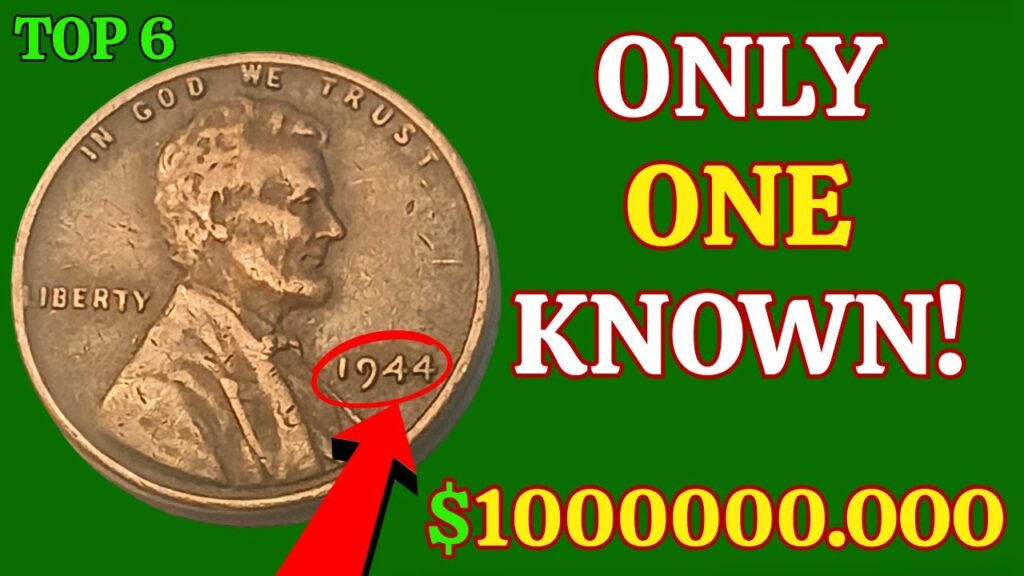
🥉 1944 Wheat Penny – Up to $111,500+ (Steel Error) ⚠️
Most 1944 pennies are copper—but a tiny number were mistakenly struck on leftover steel planchets from 1943.
🔎 How to Identify
- Use a magnet
- If it sticks → possible steel penny
- If not → normal copper
💰 Auction Prices
- 1944 steel penny: $111,500+
- High-grade copper versions: tens of thousands
🪙 4. 1945 No Mint Mark Wheat Penny – Up to $28,700+ 📈
The 1945 penny marks the end of World War II and is highly collectible in pristine condition.
🔎 Why It’s Valuable
- Historical significance
- Rare in top mint-state condition
- Strong strike and red luster drive demand
💰 Auction Highlight
- Top graded example sold for $28,700
🪙 5. 1951 No Mint Mark Wheat Penny – Up to $22,500+ 💎
The 1951 penny represents post-war prosperity and is a key date for condition rarity collectors.
🔎 Why It’s Valuable
- Ultra-high grade survivors are scarce
- Bold date, crisp wheat details, and red copper color increase value
💰 Auction Highlight
- Top certified example sold for $22,500
🪙 6. 1953 No Mint Mark Wheat Penny – Up to $20,800+ ✨
The 1953 wheat penny is another sleeper coin that explodes in value at elite grades.
🔎 Why It’s Valuable
- Rare in flawless mint-state condition
- Strong collector demand for top-graded coins
💰 Auction Highlight
- Elite specimen sold for $20,800
🔍 Step-by-Step: How to Find Valuable Wheat Pennies
1️⃣ Check the date and mint mark
2️⃣ Inspect color (red, red-brown, brown)
3️⃣ Look for sharp details and strong strike
4️⃣ Test 1944 coins with a magnet
5️⃣ Search for errors like doubled dies
6️⃣ Get high-grade coins professionally graded
🛡️ How to Protect Your Rare Pennies
- ❌ Never clean the coin
- ✅ Store in coin holders or flips
- ✅ Avoid moisture and fingerprints
- ✅ Submit rare coins for professional grading
Grading can multiply value hundreds or thousands of times.
🏛️ Numismatic Wealth Insight: Pennies That Build Legacy
Wheat pennies prove that wealth can come from the smallest coins.
Value comes from rarity, condition, history, and collector demand.
A single perfect penny can outperform stocks, gold, and real estate investments.
🧠 Collector Strategy: Hidden Fortune in Pocket Change
Millions of wheat pennies exist—but only a microscopic fraction are elite survivors.
Those elite coins are the ones collectors fight for.
Check your jars, drawers, inherited collections, and coin rolls.
Your next penny could be worth $20,000 to $114,000+. 🪙
📢 Call-to-Action
Search your coins today and share this guide with collectors.
You might already own a life-changing penny.

Leave a Reply