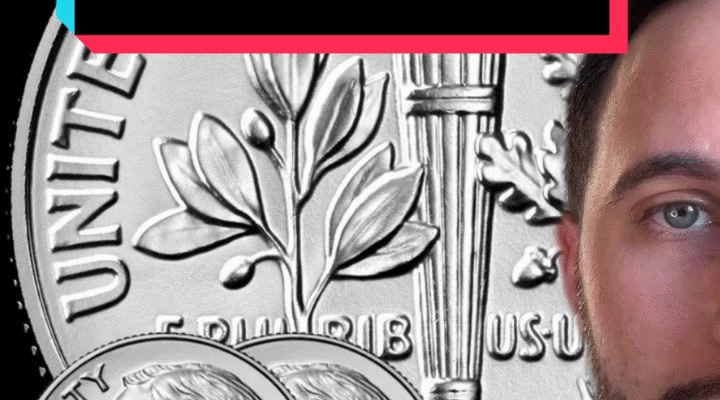
New 2022 Dime Error? The Truth
🔎 Is This a Genuine New Error—or Just Social Media Noise?
Over the past year, collectors have been buzzing about a so-called “2022 Burning Branch Roosevelt Dime Error,” often paired with claims of a $13.50 sale and suggestions that it could be “the next big thing.”
So what’s the real story?
At PennyVerse.info, we don’t chase hype—we analyze it. Below is a clear, fact-based breakdown of what this coin actually is, why it exists, and what it’s realistically worth.
🪙 1. What a Normal 2022 Roosevelt Dime Looks Like
Before calling anything an error, always confirm the base coin.
➤ Obverse (Front)
- Portrait of Franklin D. Roosevelt
- Date: 2022
- Mint mark: P (Philadelphia) or D (Denver), above the date
➤ Reverse (Back)
Standard Roosevelt dime reverse:
- Torch = Liberty
- Olive branch = Peace
- Oak branch = Strength
- Legends: E PLURIBUS UNUM, UNITED STATES OF AMERICA, ONE DIME
If your coin matches this layout, you’re starting with a normal modern dime.
🔥 2. What Is the “Burning Branch” Error—Really?
The dramatic name is not an official numismatic term.
What collectors are actually seeing is a minor strikethrough error affecting part of the branch on the reverse.
✔ How Strikethrough Errors Happen
During striking, foreign material (such as grease, debris, cloth fibers, or metal shavings) gets between the die and the blank planchet.
The result:
- Part of the design appears weak, missing, or distorted
- The affected area can look “burned,” “melted,” or recessed
- The error disappears once the debris clears
📌 This is a temporary striking anomaly—not a die creation error.
💲 3. Is a $13.50 Sale Impressive?
Short answer: No—it’s normal.
Understanding Error Coin Pricing
Major Errors (high value):
- Doubled dies
- Off-center strikes
- Wrong-planchet strikes
- Mules
➡ Often worth hundreds to millions
Minor Errors (low value):
- Grease-filled dies
- Small die chips
- Light strikethroughs
➡ Usually worth $1–$20
The reported $13.50 sale fits squarely into the minor-error category, driven more by:
- Social media novelty
- Eye appeal
- Impulse buying
Not rarity.
🧠 4. Why This Error Is NOT Rare
To judge real value, professionals look at four factors:
✔ 1. Rarity
Strikethroughs occur frequently in modern minting.
✔ 2. Error Type
Striking anomalies ≠ die-creation errors
(Die-creation errors are where big money lives.)
✔ 3. Visual Impact
Small, localized distortion—not dramatic.
✔ 4. Collector Demand
Short-term interest, not long-term scarcity.
📌 Conclusion: Interesting, but common.
🔬 5. A Reality Checklist for “New Error” Claims
Use this whenever a coin goes viral online:
1️⃣ Identify the error type
2️⃣ Confirm it’s mint-caused (not damage)
3️⃣ Research multiple real sales
4️⃣ Ignore single inflated listings
5️⃣ Ask: Would this be worth grading?
🛑 Never grade a $5–$15 coin—grading costs more than the value.
🏦 6. Where Minor Errors Actually Sell
If you find one of these dimes:
✔ eBay
✔ Facebook coin groups
✔ Local coin shows
❌ Major auction houses (not for low-value anomalies)
⚠️ Never Clean the Coin
Cleaning removes original mint surfaces and reduces value, even for legitimate errors.
Leave it exactly as found.
📸 Think You Found a 2022 Dime Error?
If you want confirmation, send:
- Clear front & back photos
- Close-ups of the affected branch
- Optional short video
- How and where it was found
You’ll receive:
✔ Minor-error identification
✔ Honest value range
✔ “Grade or not?” guidance
💬 Expert Perspective
“Modern mint anomalies are great teaching tools—but only true die errors create real wealth.”
— Dr. Eleanor Vance, Chief Numismatist, RareCoin Guild
⏳ Final Verdict
The 2022 “Burning Branch” dime:
- ✔ Real mint anomaly
- ✔ Small collectible premium
- ❌ Not rare
- ❌ Not investment-grade
- ❌ Not worth grading
Still worth examining—but not chasing.
🪙 Every collector starts by learning which errors don’t matter.

Leave a Reply