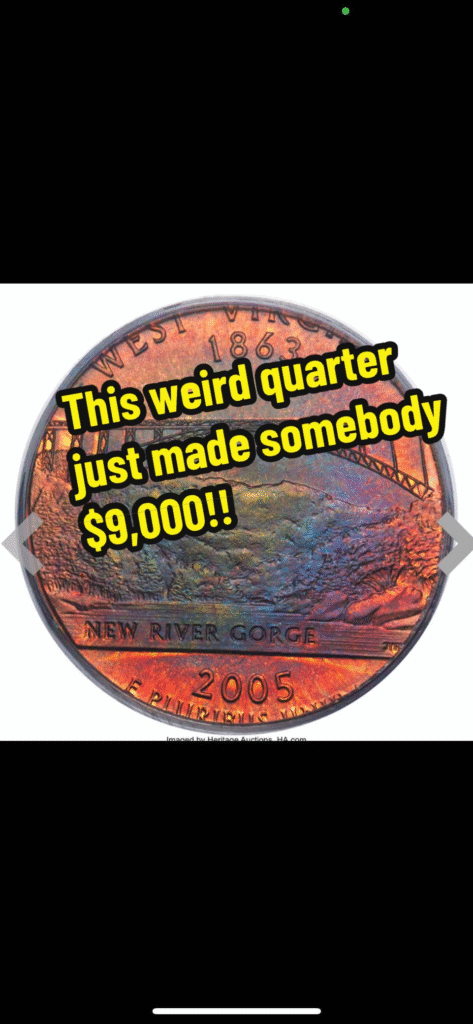
$9,000 Error Quarter Explained
💥 How a Simple Quarter Turned Into a $9,000 Coin
At first glance, this coin looked strange — but not valuable.
Then collectors realized what it was.
A rare West Virginia State Quarter had been accidentally struck on a copper penny planchet, creating a dramatic mint error that later sold for $9,000 at auction 💰.
This guide explains why this error is so valuable, how to spot one step by step, and what to do if you ever find a similar coin in your change.
💰 Step 1: How a Quarter Becomes a $9,000 Error Coin
At the U.S. Mint, coin blanks (called planchets) are fed automatically into high-speed presses.
Occasionally, a blank meant for one denomination ends up in the wrong press.
Here’s what happened in this case:
- A penny planchet entered a quarter press
- The quarter design was struck onto solid copper
- The result was a wrong-planchet error, one of the most collectible mint mistakes
📌 Because these errors are usually caught immediately, very few ever escape into circulation — which is why collectors pay big money for them.
🔎 Step 2: How to Spot a Quarter Struck on a Penny Planchet (Step by Step)
You don’t need special tools to start — just careful observation.
🎨 Step 2.1: Look for an Unusual Color
- Normal quarters are silver-gray
- This error coin appears reddish or copper-colored
- The color comes from a pure copper penny blank
🚨 A copper-colored quarter should always raise suspicion.
📏 Step 2.2: Check the Size
- The coin will be noticeably smaller than a regular quarter
- Penny planchets are thinner and narrower
💡 Place it next to a normal quarter — the size difference is easy to see.
🏞️ Step 2.3: Confirm the Design
Flip the coin and inspect the reverse:
- If it shows a state quarter design (such as West Virginia)
- But the coin is copper-colored and undersized
- ✅ That’s a strong sign of a wrong-planchet error
⚖️ Step 2.4: Weigh the Coin (Most Important Test)
Use a digital scale accurate to 0.01 grams.
| Coin Type | Weight |
|---|---|
| Normal Quarter | 5.67 grams |
| Copper Penny Planchet | ~3.11 grams |
| Error Quarter (Sold) | 3.1 grams |
📌 Matching penny weight confirms the coin was struck on the wrong blank, not altered later.
🏆 Step 3: The $9,000 Auction Result
When this error quarter appeared at auction:
- Collectors immediately recognized its authenticity
- Competitive bidding followed
- 💵 Final sale price: $9,000
Collectors prize wrong-planchet errors because they are:
- ✅ Extremely rare
- ✅ Easy to authenticate
- ✅ Visually dramatic
⚠️ Step 4: What This Means for Your Pocket Change
Before spending your coins, watch for:
- 🔸 Unusual color
- 🔸 Smaller or thinner size
- 🔸 Coins that feel lighter
- 🔸 Designs struck on the wrong metal
💎 Those small details can be worth thousands of dollars.
🛡️ Step 5: What to Do If You Find One
If you believe you’ve found a similar error, act carefully:
1️⃣ Do NOT clean the coin ✋
Cleaning can permanently destroy value.
2️⃣ Store it safely
Use a protective coin holder or flip.
3️⃣ Get it authenticated
Submit it to PCGS or NGC for grading.
4️⃣ Sell through trusted channels
- 🏆 Heritage Auctions
- 💎 GreatCollections
⚠️ Warning: Altered coins exist. Only certified examples bring premium prices.
✨ Final Thoughts
This $9,000 error quarter proves that valuable treasures still hide in everyday pocket change.
One quick glance.
One simple weight check.
That’s all it took to turn 25 cents into a collector jackpot 💰🪙
So before you drop that quarter into a vending machine…
🔍 Take a closer look — it might be worth more than your next paycheck.

Leave a Reply