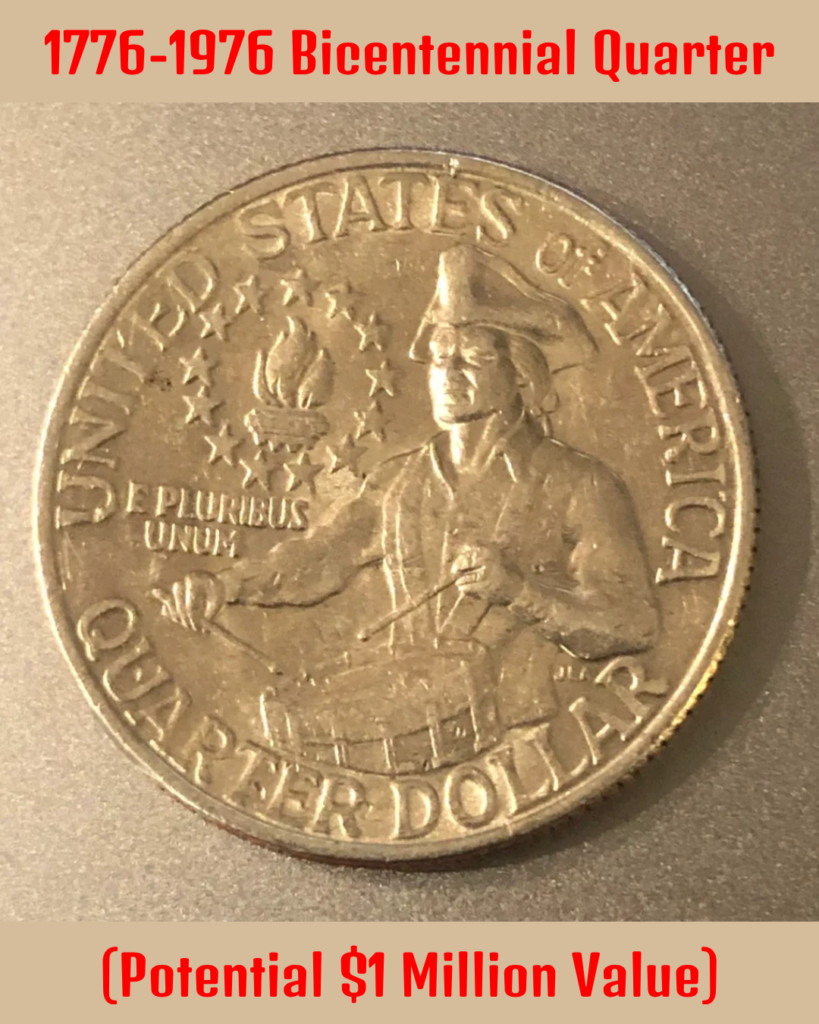
Every year, viral videos explode across YouTube and TikTok claiming a 1776–1976 Bicentennial Quarter with no mint mark is worth $1,000,000.
It sounds life-changing… right? 🤑
Before you start celebrating, let’s separate verified facts from internet hype and walk through exactly how to evaluate your coin the right way.
⚡ Quick Breakdown (What You Need to Know Fast)
- ✔️ No mint mark = Normal Philadelphia strike
- ✔️ Most Bicentennial quarters are worth $0.25 to $3
- ❌ No confirmed public auction sale of a $1,000,000 example
- 🔍 Only rare, authenticated mint errors carry serious value
Now let’s go deeper.
🏛 Why So Many People Believe “No Mint Mark” Means Rare
The Bicentennial Quarter (1776–1976) was minted in massive quantities at:
- Philadelphia (No mint mark)
- Denver (D)
- San Francisco (S)
👉 A missing mint mark does NOT automatically mean rare.
Philadelphia coins traditionally had no mint mark during that period. That’s completely normal.
Only specific documented mint errors or die varieties can make one valuable.
🔎 How to Check Your Bicentennial Quarter (Step-by-Step Guide)
Follow this professional evaluation checklist before believing online claims.
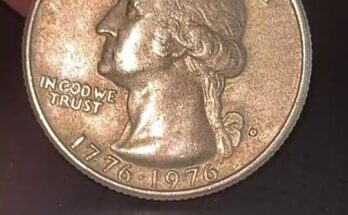
1️⃣ Check the Mint Mark Location
📍 Location: Under George Washington’s ponytail.
- No mint mark? → Standard Philadelphia coin.
- Scratched or altered area? → Likely damaged.
- Truly missing mint mark from the die itself? → Extremely rare and must be authenticated.
⚠️ Important: Many altered coins have mint marks intentionally removed.
2️⃣ Weigh the Coin Precisely
Use a digital scale accurate to 0.01 grams.
- Normal clad quarter: 5.67 grams
- 40% silver version: ~5.75 grams
If weight is far outside this range, it may be:
- Damaged
- Counterfeit
- Heavily worn
Weight alone does not equal value.
3️⃣ Inspect the Edge Carefully
Look at the coin’s edge:
- 🟤 Copper stripe visible → Standard clad quarter
- ⚪ Solid silver color (no stripe) → 40% silver collector issue
This is one of the quickest identification methods.
4️⃣ Use Magnification (10x–20x Loupe Recommended)
Professional coin collectors use magnification to inspect:
- Mint mark alterations
- Tool marks or smoothing
- Weak strikes vs. true die errors
- Filled dies (common, not rare)
If the surface looks tampered with, value drops significantly.
5️⃣ Compare With Verified Auction Records
Before trusting social media, check real sources:
- PCGS PhotoGrading
- NGC Variety Database
- Heritage Auctions Archives
- Stack’s Bowers Auction Results
- GreatCollections Sales
If your coin does not match a documented rare variety, it is likely common.
💵 What Bicentennial Quarters Are Actually Worth
Let’s look at realistic pricing.
🪙 Common Circulated Coins
$0.25 – $3
This applies to the vast majority of examples.
💎 High-Grade or Verified Error Coins
$20 – $3,000+
Only applies if:
- Professionally graded
- High mint state (MS67+)
- Or confirmed rare error variety
🚫 The Truth About the $1,000,000 Claim
Despite viral headlines:
- ❌ No verified public auction sale at $1,000,000
- ❌ No PCGS or NGC certified example at that price
- ❌ No documentation from major auction houses
Until one is sold by a major auction firm, these claims remain unverified.
🚨 Warning Signs of Coin Scams
Be cautious if you see:
- “Only 2 exist!” claims without certification
- Obvious mint mark grinding or damage
- Marketplace listings priced unrealistically
- Videos that show no references or documentation
Professional authentication is everything in numismatics.
🛡 Think You Found Something Rare? Do This Immediately
1️⃣ Do NOT clean the coin 🚫
2️⃣ Take clear photos (obverse, reverse, edge)
3️⃣ Record exact weight and measurements
4️⃣ Submit to professional grading services:
- PCGS
- NGC
If authenticated as rare, contact:
- Heritage Auctions
- Stack’s Bowers
- GreatCollections
Certified coins consistently sell for more than raw coins.
🎓 Why Numismatic Experts Remain Skeptical
True “missing mint mark” rarities do exist in U.S. coinage history.
However, those cases are:
- Extremely well-documented
- Verified by grading services
- Supported by auction records
Bicentennial quarters were struck in enormous quantities, making standard “no mint mark” examples completely normal.
Extraordinary claims require extraordinary proof.
🏆 The Bottom Line: Fact vs. Fantasy
Could a Bicentennial quarter be valuable?
Yes — but only if it is a verified, documented mint error in high grade.
A regular “no mint mark” coin is simply a Philadelphia issue.
Authenticate first. Believe later.
That’s how smart collectors avoid costly mistakes. 😉

Leave a Reply