
🪙 Is Your 1888 Indian Head Penny Worth More Than You Think?
At first glance, an 1888 Indian Head Penny may look like just another old copper coin. But collectors know that some examples are worth hundreds—or even thousands—of dollars.
Depending on its condition, original color, and rare mint varieties, this classic U.S. cent can be worth anywhere from just a few dollars to more than $5,000.
So, how can you tell if your coin is one of the valuable ones?
Follow this beginner-friendly guide to find out!
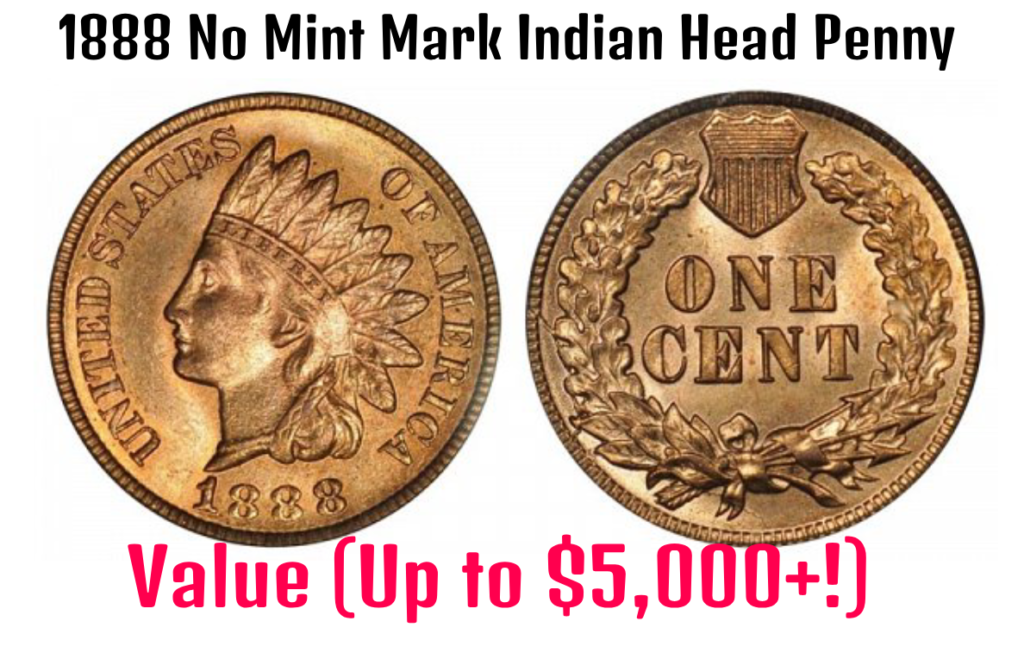
📊 1888 Indian Head Penny Value Chart
| Grade | Estimated Value* | Notable Auction Results |
|---|---|---|
| Good (G-4) | $3–$10 | — |
| Fine (F-12) | $15–$25 | — |
| Extremely Fine (XF-40) | $30–$75 | — |
| Mint State (MS-60) | $100–$300 | Around $325 |
| Gem Mint State (MS-65+) | $500–$1,200+ | Over $5,000 for exceptional Red examples |
Note: Values vary depending on eye appeal, certification, color designation, and current market demand.
💡 Fun Fact: More than 37 million 1888 Indian Head Pennies were produced, but fully original Red (RD) examples are scarce because most copper coins naturally darken over time.
🔍 Step 1 – Check the Coin’s Color
For copper coins, color is one of the biggest factors affecting value.
Professional grading services classify copper coins into three color categories.
🔴 Red (RD)
✨ Nearly all original mint red remains.
These are the most desirable and often sell for the highest prices.
🟤 Red-Brown (RB)
A mixture of original red and natural brown.
Usually worth significantly more than fully brown examples.
⚫ Brown (BN)
The coin has fully toned to brown after years of circulation or storage.
Most surviving 1888 pennies fall into this category.
💡 Collector Tip: Shine a flashlight across the coin at an angle. Hidden traces of original red luster are sometimes easier to spot this way.
🏛 Step 2 – Check for a Mint Mark
This is one of the easiest authenticity checks.
Every genuine 1888 Indian Head Penny was struck at the Philadelphia Mint.
✔ Correct Coin
No mint mark.
❌ Warning Signs
If your coin has an “S”, “O”, or any other mint mark, it is not an authentic 1888 Indian Head cent.
💎 Step 3 – Look for Valuable Varieties
Some 1888 pennies are worth much more because of collectible die varieties.
🥇 Doubled Die Obverse (DDO)
Estimated Value:
💰 $300–$1,000+
Inspect carefully for doubling on:
- Date
- LIBERTY
- Eye and eyelid
- Lettering
🥈 Repunched Date (RPD)
Estimated Premium:
💰 $50–$200+
Look closely for:
✔ Shadow-like outlines around the numbers
✔ Extra impressions beneath the date
🧭 Step 4 – Grade Your Coin
Condition is one of the most important factors in determining value.
| Grade | What to Look For |
|---|---|
| Good (G-4) | Date visible, LIBERTY mostly worn away |
| Fine (F-12) | Partial LIBERTY visible, moderate feather detail |
| Extremely Fine (XF-40) | Full LIBERTY, strong feather details, light wear |
| Mint State (MS-60+) | No wear, original mint luster remains |
💡 Even a small increase in grade can dramatically increase value.
🏆 Most Valuable 1888 Indian Head Penny Varieties
🥇 MS-66 Red (RD)
Estimated Value:
💰 $2,500–$5,000+
Exceptional fully Red examples are among the most desirable 1888 Indian Head cents.
🥈 Doubled Die Obverse
Estimated Value:
💰 $300–$1,000+
Strong, obvious doubling commands the highest premiums.
🥉 Repunched Date
Estimated Value:
💰 $50–$200+
Collectors actively seek these minor but interesting varieties.
📦 Step 5 – Where Can You Find an 1888 Indian Head Penny?
Many collectors still discover these coins in unexpected places.
✅ Best Places to Search
🏠 Family coin jars
📦 Estate sales
🪙 Coin shows
👨👩👧 Inherited collections
🏦 Old coin albums
⚠️ Be Careful When Buying
Avoid:
❌ “Unsearched” coin lots with unrealistic claims
❌ Counterfeit grading holders
❌ Overpriced raw coins without authentication
📤 Step 6 – Should You Have It Professionally Graded?
Professional grading is worth considering if your coin has:
✅ Original Red color
✅ Strong eye appeal
✅ A possible DDO or RPD variety
✅ Mint State condition
Certification by PCGS or NGC can increase buyer confidence and, in many cases, improve resale value.
Example
| Coin | Approximate Market Value |
|---|---|
| MS-63 Brown | $100–$200 |
| MS-64 Red | $500–$1,500+ |
📈 Market Trends
Interest in Indian Head Pennies remains strong among collectors.
Recent trends include:
📈 Greater demand for original Red examples
🏆 Increased competition for high-grade certified coins
📱 Growing interest from younger collectors through social media
Although future prices can never be guaranteed, premium-quality coins continue to perform well in the numismatic market.
🚫 Common Mistakes That Can Reduce Value
Avoid these common errors:
❌ Cleaning your coin
❌ Polishing the surface
❌ Scratching or rubbing the copper
❌ Improper storage
❌ Selling without researching its variety
A cleaned coin can lose a significant portion of its collector value.
❓ Frequently Asked Questions
Is every 1888 Indian Head Penny valuable?
Yes, even heavily circulated examples usually carry a premium over face value because of their age and collectibility. However, higher grades and rare varieties are worth substantially more.
What is the rarest 1888 Indian Head Penny?
Among the most desirable are Gem Red (RD) examples and recognized Doubled Die Obverse varieties.
Should I clean my coin?
🚫 No.
Collectors strongly prefer coins with original surfaces, even if they appear dark or worn.
Where can I sell a valuable Indian Head Penny?
Many collectors choose:
- Major coin auctions
- Reputable coin dealers
- Coin shows
- Online marketplaces
Professional certification often attracts more buyers.
🎯 Final Thoughts
The 1888 Indian Head Penny remains one of the most popular classic U.S. coins for collectors. While common circulated examples may be worth only a few dollars, exceptional Mint State coins and rare die varieties can sell for thousands.
Before putting that old penny back in the drawer, take a closer look. You might be holding a small piece of American history with surprising value.
Happy collecting! 🪙✨


Leave a Reply