
🪙 Could a 1976-D Penny in Your Pocket Be Worth a Small Fortune?


4
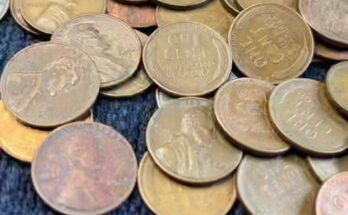
Most 1976-D Lincoln pennies are worth only one cent. Millions were struck at the Denver Mint and entered everyday circulation, making them one of the more common modern Lincoln cents.
However, a small number of 1976-D pennies with genuine mint errors or exceptional preservation have attracted strong interest from collectors. While ordinary examples remain common, certified error coins and top-grade specimens can sell for significant premiums.
If you have a jar of old pennies at home, it’s worth taking a closer look before spending them.
💎 Why Some 1976-D Lincoln Pennies Are Valuable
The value of a Lincoln cent isn’t determined by its date alone.
Collectors usually look for coins that have one or more of these characteristics:
- ⚙️ Genuine mint errors
- ⭐ Outstanding Mint State condition
- 🏅 Professional certification
- 📉 Scarcity of the specific variety
- ❤️ Strong collector demand
When these factors combine, a coin’s value can increase dramatically.
🏛️ A Penny From America’s Bicentennial Era
The year 1976 marked the celebration of the United States Bicentennial, making coins from this period especially interesting to many collectors.
Lincoln cents struck at the Denver Mint carry a small “D” mint mark beneath the date.
Although billions were produced, only a tiny percentage exhibit collectible mint errors or survive in exceptional condition.
🔍 Valuable Errors to Look For


5
If you’re examining a 1976-D penny, pay close attention to these possible mint errors.
✨ Doubled Die Varieties
Look for noticeable doubling on:
- LIBERTY
- IN GOD WE TRUST
- The date
True doubled dies are created during the die manufacturing process and are highly collectible.
🎯 Off-Center Strikes
An off-center strike occurs when the coin isn’t properly aligned during production.
The more dramatic the misalignment—while still showing the date—the greater the collector interest.
⚙️ Die Cracks and Cuds
Damaged dies sometimes create:
- Raised lines
- Extra metal
- Large raised “blobs” called cuds
These varieties are popular among error-coin collectors.
💎 Exceptional Strike Quality
Some collectors also seek coins displaying:
- Sharp details
- Strong original luster
- Outstanding eye appeal
Premium-quality Mint State coins often command much stronger prices than circulated examples.
🏦 Where Rare Coins Are Still Being Found
Many collectible pennies have been discovered in everyday places, including:
- 🫙 Coin jars
- 📦 Inherited collections
- 🏦 Bank-wrapped coin rolls
- 🗄️ Desk drawers
- 💰 Pocket change
While major discoveries are uncommon, checking your coins costs nothing.
🧭 Step-by-Step Guide to Checking a 1976-D Penny
✅ Step 1: Verify the Date and Mint Mark
Look for:
- 1976
- D mint mark below the date
✅ Step 2: Examine the Design
Using a magnifying glass, inspect the coin for:
- Doubled lettering
- Off-center design
- Die cracks
- Missing details
Compare your coin with photographs of known error varieties whenever possible.
✅ Step 3: Evaluate the Condition
Collectors generally prefer coins that have:
- ✨ Original luster
- 💎 Minimal wear
- 🪙 Sharp details
- 🚫 No significant damage
Higher grades typically command stronger prices.
✅ Step 4: Never Clean the Coin
Cleaning or polishing can permanently reduce collector value.
Leave the coin exactly as you found it.
✅ Step 5: Consider Professional Grading
If your coin appears unusual:
- 🏅 Have it authenticated.
- 📜 Obtain a professional grade.
- 👨💼 Consult an experienced coin dealer if needed.
Certification helps establish authenticity and market value.
💰 Can a 1976-D Penny Really Be Worth $676,000?
Claims of 1976-D Lincoln pennies selling for $676,000 are widely shared online, but there is no well-documented public auction record supporting a standard 1976-D Lincoln cent reaching that price.
What is true is that:
- ✅ Genuine mint-error coins can sell for substantial premiums.
- ✅ Exceptionally preserved Mint State examples are worth far more than face value.
- ✅ Rare varieties certified by leading grading services are the most desirable.
If you encounter a claim of an extremely high-value sale, it’s important to verify it through reputable auction records and professional grading data.
🧤 Tips for Protecting Valuable Pennies
If you think you’ve found an unusual coin:
- 🧤 Handle it only by the edges.
- 📦 Store it in an acid-free holder.
- 📸 Photograph both sides.
- 🚫 Never clean it.
- 🌡️ Keep it in a cool, dry environment.
Proper storage helps preserve long-term collector value.
❓ Frequently Asked Questions
💬 Is every 1976-D penny valuable?
No. The vast majority are common circulation coins worth one cent. Only rare error varieties or exceptional high-grade examples command significant premiums.
💬 What is the most important thing to check?
Look for genuine mint errors such as doubled dies, off-center strikes, die cracks, and unusual characteristics.
💬 Should I clean my coin before having it graded?
No. Cleaning almost always lowers collector value.
💬 How can I know whether my penny is authentic?
A professional grading service or reputable coin dealer can verify authenticity and condition.
📈 Why Collectors Love Error Coins
Mint errors offer a fascinating glimpse into the coin-production process.
Because they were created unintentionally and often exist in limited numbers, authentic error coins continue to attract strong interest from collectors around the world.
Learning how to recognize these varieties can make coin collecting both educational and rewarding.
🎯 Before You Spend Your Next Penny…
Most 1976-D Lincoln cents are ordinary circulation coins.
But every so often, a genuine mint error or beautifully preserved example appears and reminds collectors why it’s worth checking every coin carefully.
Take a few extra seconds to inspect your spare change—you never know when an overlooked penny could become the highlight of a collection. 🪙✨

Leave a Reply