
🪙 $300,000 1943 Copper Wheat
Every coin collector dreams of discovering a once-in-a-lifetime treasure—and for some families, that dream may already be sitting in an old collection.
Steve recently shared an incredible story. He said he has a complete set of Wheat Pennies that originally belonged to his brother, who sadly passed away. Inside that collection is something that instantly caught attention: a 1943 copper penny.
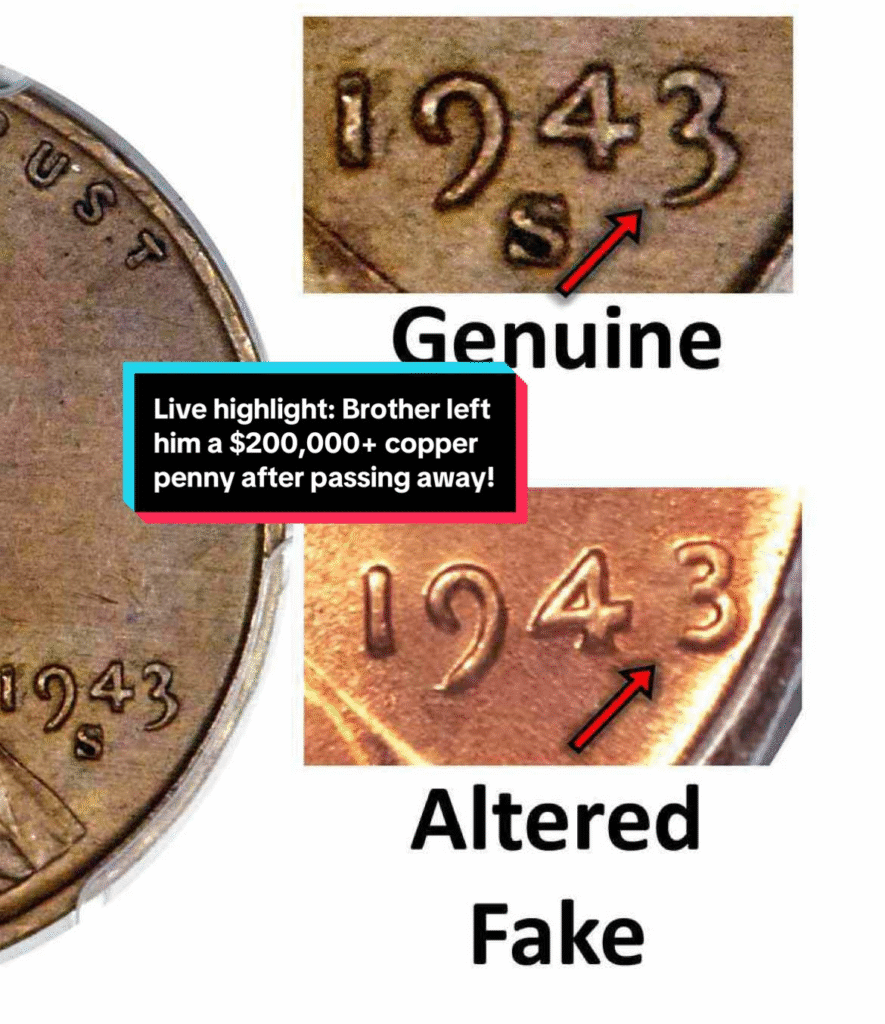
If that coin is authentic, it could be worth $200,000 to $300,000 or more. 😱
Let’s break down why this coin is so valuable and exactly how to check if a 1943 copper penny is real.
⚙️ Why the 1943 Copper Penny Is So Rare
In 1943, during World War II, the U.S. Mint stopped using copper for pennies and switched to zinc-coated steel to save metal for the war effort.
👉 That means almost all 1943 pennies are steel.
However, a tiny number of copper planchets from 1942 accidentally made it into the presses. Those mistakes created one of the most famous and valuable U.S. error coins ever known.
🪙 Genuine 1943 copper pennies are among the holy grails of American coin collecting.
💎 How Much Is a 1943 Copper Penny Worth?
If authenticated, prices typically range:
- 💵 $200,000 – $300,000
- 💵 Some examples have sold for even more at auction
Condition, mint mark, and certification all affect final value—but even a lower-grade example is life-changing money.
✅ 3 Critical Steps to Check If Your 1943 Penny Is Real
Before celebrating, you must verify the coin carefully. Here are three essential checks every collector should perform:
🔍 Step 1: Check the Weight
- ✔️ Real copper penny weight: ~3.1 grams
- ❌ Steel penny weight: ~2.7 grams
Use a digital scale for accuracy. Even small differences matter.
🧲 Step 2: Magnet Test
- ✔️ Copper does NOT stick to a magnet
- ❌ Steel sticks instantly
If your 1943 penny sticks to a magnet, it is not the rare copper version.
🔢 Step 3: Inspect the “3” in 1943
This is extremely important.
- The curve of the “3” should sit clearly below the “4”
- Many fakes are altered 1948 pennies, where part of the “8” is scraped off to look like a “3”
⚠️ There are many fakes out there, so this detail can save you from false hope.
🚨 What to Do If Your Coin Passes All Tests
If your penny:
✔️ Weighs 3.1 grams
✔️ Does not stick to a magnet
✔️ Has a correct “3” shape
👉 Do NOT clean it
👉 Store it safely
👉 Submit it to a professional grading service (PCGS or NGC)
Only professional authentication can confirm its true value.
❤️ A Note on the Story Behind the Coin
This discovery is also deeply personal. Collections passed down from loved ones often hold more than just financial value—they carry history, memories, and meaning.
🙏 Our condolences go out to Steve and his family. If this coin is real, it would be an extraordinary legacy left behind.
🔔 Final Reminder for Collectors
Thousands of people own Wheat Penny collections and never realize what they have.
Before selling, spending, or ignoring old coins:
👀 Check every date
🧲 Test carefully
🪙 Research thoroughly
Your next coin could be worth hundreds of thousands of dollars.
Leave a Reply