
$9,000 Quarter Error Guide
Most quarters look exactly the same: silver-colored, the size you expect, and worth only 25 cents.
But occasionally, a mistake at the United States Mint creates something extraordinary.
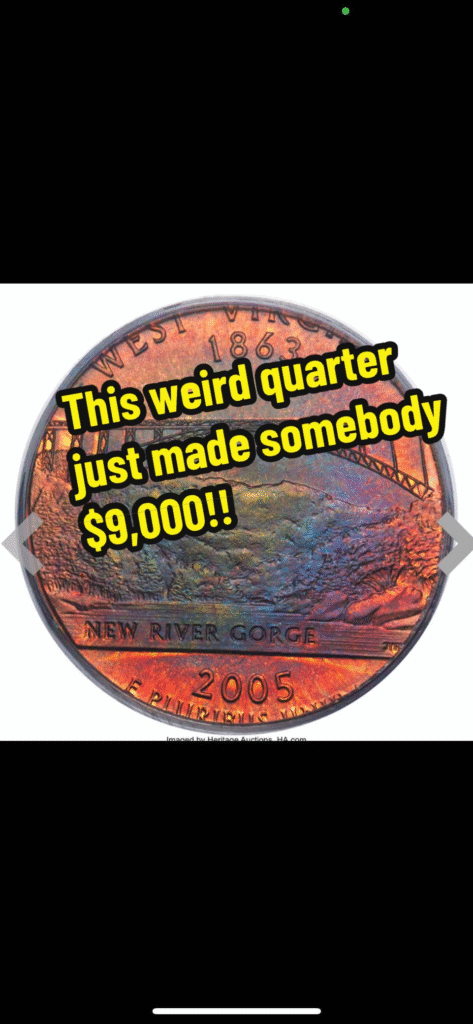
One unusual West Virginia State Quarter was accidentally struck on a penny planchet, creating a dramatic mint error that later sold for about $9,000 at auction. 💰
This guide explains why this error happened, how to identify it step by step, and what to do if you find one.
💥 Step 1: How a Quarter Becomes a $9,000 Error Coin
Coins are made using metal blanks called planchets. These blanks are fed into high-speed presses where the coin designs are stamped.
Sometimes, a blank meant for one coin accidentally enters the press for another denomination.
In this case, something unusual happened:
- A penny planchet entered a quarter press
- The quarter design was struck onto the copper blank
- The result was a wrong-planchet error
These mistakes are extremely rare because mint quality control normally catches them quickly.
That’s why collectors are willing to pay thousands of dollars when one escapes into circulation.
🔍 Step 2: How to Identify a Quarter Struck on a Penny Planchet
You don’t need advanced equipment to begin checking your coins. Just follow these simple steps.
🎨 Step 2.1: Look for an Unusual Color
The first sign is usually the color.
Normal quarters are:
- Silver-gray in appearance
But this error coin appears:
- Reddish or copper-colored
This happens because the coin was struck on a penny blank instead of the usual copper-nickel quarter blank.
🚨 A copper-colored quarter should always be investigated.
📏 Step 2.2: Compare the Size
Next, compare the coin with a normal quarter.
A penny planchet is:
- Smaller in diameter
- Slightly thinner
When struck with a quarter design, the coin will often appear undersized.
💡 Placing the coin next to a normal quarter makes the difference easy to see.
🏞️ Step 2.3: Check the Design Carefully
Flip the coin and inspect the reverse.
If you see:
- A state quarter design
- But the coin is copper colored and smaller
That’s a strong indication of a wrong-planchet error.
Many collectors notice errors like this immediately because the design and metal do not match.
⚖️ Step 2.4: Weigh the Coin (Most Important Test)
The best confirmation test is the weight.
Use a digital scale accurate to 0.01 grams.
| Coin Type | Typical Weight |
|---|---|
| Normal Quarter | 5.67 grams |
| Penny Planchet | ~3.11 grams |
| Known Error Coin | ~3.1 grams |
If the coin weighs close to 3.1 grams, it strongly suggests it was struck on a penny planchet.
🏆 Step 3: The $9,000 Auction Result
When this unusual coin appeared at auction, collectors immediately recognized its importance.
Several factors drove the price higher:
- Extreme rarity
- Strong visual difference from normal coins
- Easy authentication through weight and metal
After competitive bidding, the coin reportedly sold for about $9,000.
Collectors love wrong-planchet errors because they are both rare and visually dramatic.
⚠️ Step 4: What This Means for Your Pocket Change
Most people never check their coins carefully.
But unusual details can reveal hidden treasures.
Watch for coins that have:
🔸 Unusual color
🔸 Smaller size
🔸 Lighter weight
🔸 Designs struck on the wrong metal
Even one of these clues could indicate a valuable mint error.
🛡️ Step 5: What to Do If You Find a Similar Coin
If you think you’ve discovered a wrong-planchet coin, handle it carefully.
Follow these steps:
1️⃣ Do not clean the coin
2️⃣ Store it in a protective holder
3️⃣ Take clear photos for documentation
4️⃣ Submit it for professional authentication
Trusted grading companies include:
- 🏅 Professional Coin Grading Service
- 🏅 Numismatic Guaranty Company
If certified, auction houses like Heritage Auctions or GreatCollections may help you sell it to serious collectors.
Certification is critical because only verified coins bring premium prices.
🧭 Collector’s Jackpot Insight
The famous quarter struck on a penny planchet proves something exciting about coin collecting:
Valuable treasures can still appear in everyday pocket change.
One quick observation.
One simple weight check.
That’s all it took to transform a 25-cent coin into a $9,000 collectible. 🪙💰
So before dropping your next quarter into a vending machine, take a closer look — you might be holding a hidden jackpot.
Leave a Reply