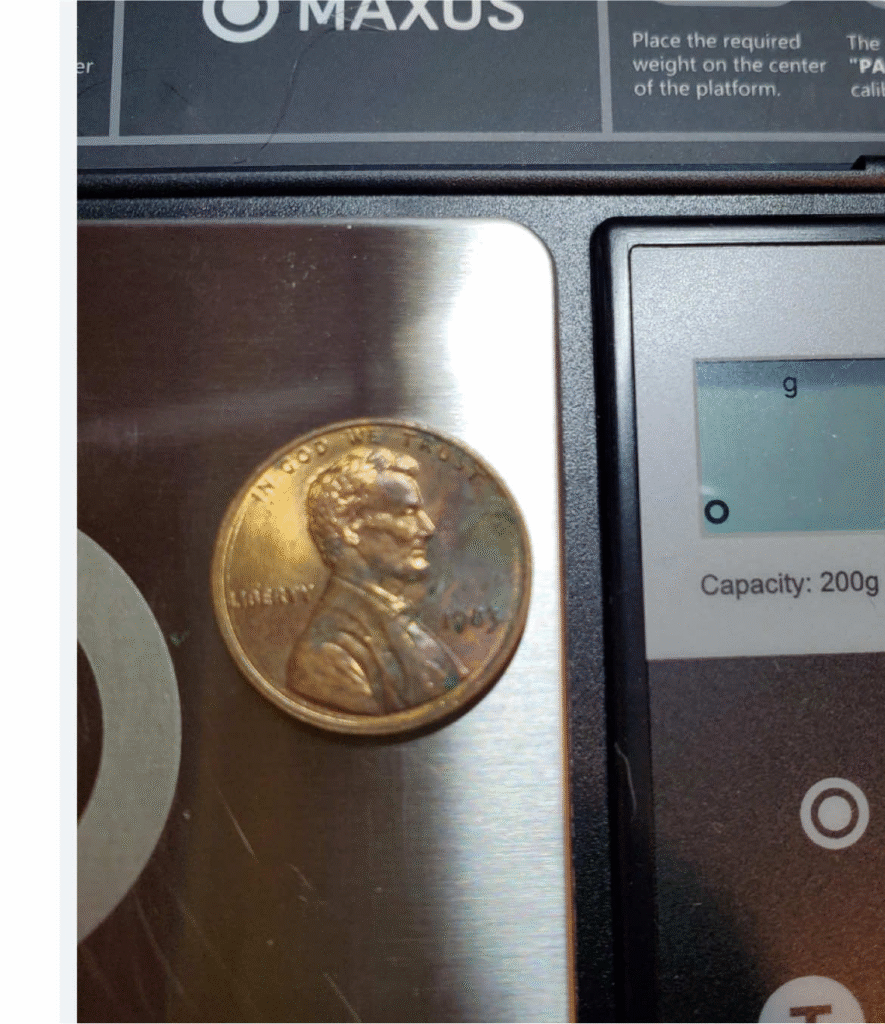
$5,000 Lincoln Penny Alert
Most 1983 pennies are only worth one cent. But a rare 1983-D copper Lincoln penny error has captured collectors’ attention because confirmed examples can sell for $2,000 to $5,000 or more.
This valuable coin exists because of a rare transitional mint mistake — and it’s something you can identify with a simple weight test. Here’s everything you need to know, explained step-by-step. 👇
⚖️ Step 1: Why the 1983-D Copper Penny Shouldn’t Exist
The key reason this coin is valuable comes from a major change in penny composition.
Important timeline:
- 🔶 Before 1982: Pennies were made of 95% copper
- 🔶 Starting in 1983: Pennies were made of copper-plated zinc
- ⚖️ Copper penny weight: 3.11 grams
- ⚖️ Zinc penny weight: 2.5 grams
If you find a 1983-D penny weighing around 3.0–3.1 grams, it means it was likely struck on an old copper blank by mistake.
This type of mint error is extremely rare and highly collectible.
💎 Step 2: Why This Penny Can Be Worth Up to $5,000
Collectors value this coin because of its unusual composition and rarity.
Key reasons for its high value:
- ✅ Mint error using copper planchet after the transition
- ✅ Extremely limited number known
- ✅ Strong demand among error coin collectors
- ✅ Historical significance as a transitional error
Because copper planchets were no longer intended for use in 1983, any confirmed example is considered a major discovery.
🔍 Step 3: How to Identify a Rare 1983-D Copper Penny
Follow this simple checklist:
⚖️ Step 3.1: Weigh Your Coin (Most Important Test)
Use a digital scale accurate to 0.01 grams.
- ✔ Rare copper error: 3.0–3.1 grams
- ❌ Normal zinc penny: 2.5 grams
If your coin weighs close to 3 grams, it could be valuable.
👀 Step 3.2: Check the Mintmark
Look under the date on the front of the coin.
- ✔ Must have a “D” mintmark
- ✔ Must show the year 1983
🎨 Step 3.3: Examine the Color
Copper coins usually show:
- Rich brown or reddish tone
- Solid copper color throughout
Zinc coins may show silver color under wear.
💰 Step 4: Estimated Value Based on Condition
The value depends heavily on condition and certification.
| Condition | Estimated Value |
|---|---|
| XF (Extra Fine) | $2,000 – $3,000 |
| AU (Almost Uncirculated) | $3,000 – $4,000 |
| MS (Mint State) | $3,500 – $5,000+ |
Certified examples typically sell for the highest prices.
🛡️ Step 5: What To Do If You Find One
If your coin passes the weight test, take these steps immediately:
✔ Protect the Coin
- Store it in a coin holder
- Avoid touching the surface
- Handle only by the edges
✔ Never Clean the Coin
Cleaning can permanently reduce value.
✔ Get Professional Authentication
Submit your coin to trusted grading services like:
- Professional Coin Grading Service (PCGS)
- Numismatic Guaranty Company (NGC)
Certification confirms authenticity and increases resale value.
📈 Step 6: Why Collectors Are Excited About This Error Coin
The 1983-D copper penny represents one of the most fascinating transitional mint errors in modern U.S. coinage.
These coins were accidentally created when leftover copper blanks were used after the mint switched to zinc production.
Because only a small number exist, collector demand remains strong.
🧠 Collector Insight: Why This Penny Could Be a Hidden Treasure
Finding a genuine 1983-D copper penny is extremely rare, but it’s not impossible. Valuable coins like this continue to surface in circulation, old collections, and estate holdings.
A simple weight test could reveal whether your ordinary penny is actually worth thousands of dollars.
Checking your coins carefully could lead to an exciting and valuable discovery. 💰

Leave a Reply