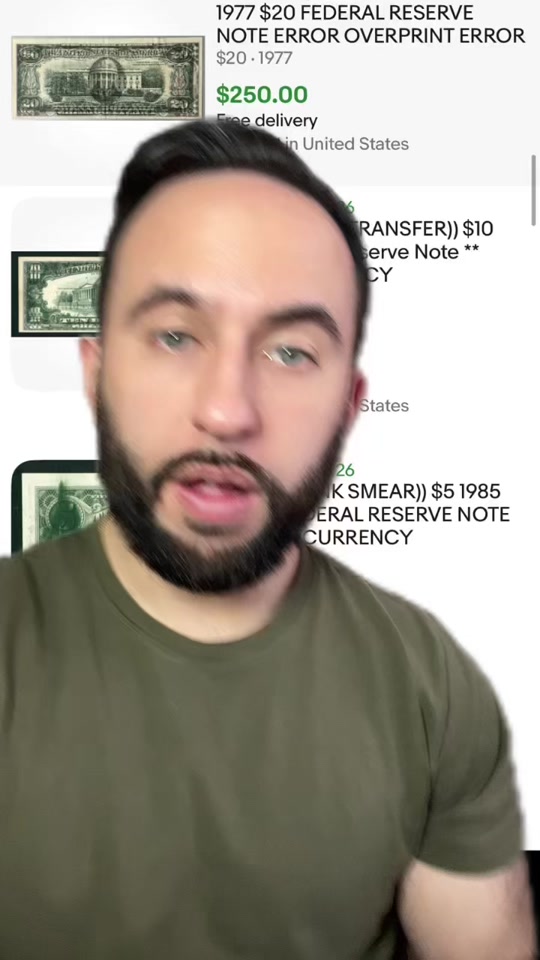
4 Paper Money Errors
Most people handle cash every day without giving it a second look.
But what if a tiny printing mistake on an ordinary bill could be worth $50… $157… or even $333+?
These are not theories.
These are real bills that already sold for real money.
Let’s walk through four simple currency errors you can spot yourself—and exactly how to identify them. 🔍
🧠 Why Currency Errors Are Exploding in Value
Collectors actively hunt for:
✅ Printing mistakes
✅ Ink problems
✅ Missing elements
✅ Star note errors
✅ Misalignment & bleed-through
Even small defects can turn pocket change into profit.
Now let’s look at real examples.
1️⃣ $5 Bill With Ink Smear Error – Sold for $157+
What most people think
“It’s just damaged.”
What collectors know
It’s a printing error.
What this error looks like
- Front: Normal older $5 bill
- Back: Heavy ink smear or streak across part of the design
This happens when wet ink spreads during the printing process.
Why it’s valuable
- Factory-made error
- Not caused by wear
- Clearly visible
- Unique appearance
How to check yours
Step-by-step:
- Inspect the back of the bill
- Look for thick ink streaks or smudges
- Make sure it is not from water damage
- Confirm the paper texture feels normal
💵 Real sale price: $157+
2️⃣ Star Note With Filled-In Star – Sold for $50
Why star notes already matter ⭐
Star notes replace damaged bills and are printed in smaller quantities.
But this one had another mistake.
The rare detail
- Star symbol printed
- But the star is filled in solid with ink
This is a printing over-ink error.
Why collectors pay for it
- Combines star note + ink error
- Easy to identify
- Popular among beginner collectors
How to spot it
- Look for a star at the serial number
- Check if the star is hollow or filled
- Compare with normal star notes
- Keep the bill flat and uncleaned
💵 Real sale price: $50
3️⃣ $10 Bill With Front Printed on the Back – Sold for $333
This one shocks people 😲
The front design is visible on the back of the bill.
Not see-through…
Not wear…
But actual ink transfer during printing.
What it looks like
- Front: normal
- Back: ghost image of the front design
This is called:
Offset printing / ink transfer error
Why it’s valuable
- Dramatic visual effect
- Easy to verify
- Strong collector demand
How to check
- Hold bill under good lighting
- Examine the back closely
- Look for portrait or text outlines
- Make sure it is printed ink, not bleed from moisture
💵 Real sale price: $333
4️⃣ $1 Bill Missing Left Seal – Sold for $180
What’s missing?
The Treasury seal on the left side.
No seal = major printing error.
Why this happens
During mass printing:
- A printing stage can be skipped
- One side fails to receive ink
Result: a missing design element.
How to identify
- Look at both seals
- Confirm one is missing completely
- No fading — totally absent
- Keep the bill crisp
💵 Real sale price: $180
🚨 Important Rules Before You Do Anything
❌ Never clean the bill
❌ Do not fold it excessively
❌ Do not tape it
❌ Do not write on it
Store flat in a sleeve if possible.
Professional grading can increase trust and resale value.
📋 Quick Reference Checklist
| Error Type | Potential Value |
|---|---|
| Ink smear | $157+ |
| Filled-in star note | $50 |
| Offset front print | $333 |
| Missing seal | $180 |
🧾 Final Thoughts
Currency errors are everywhere.
They are:
- Real
- Verifiable
- Collectible
- Profitable
And most people spend them without ever knowing.
Pay attention to your cash.
Small details create real money. 💡💵

Leave a Reply