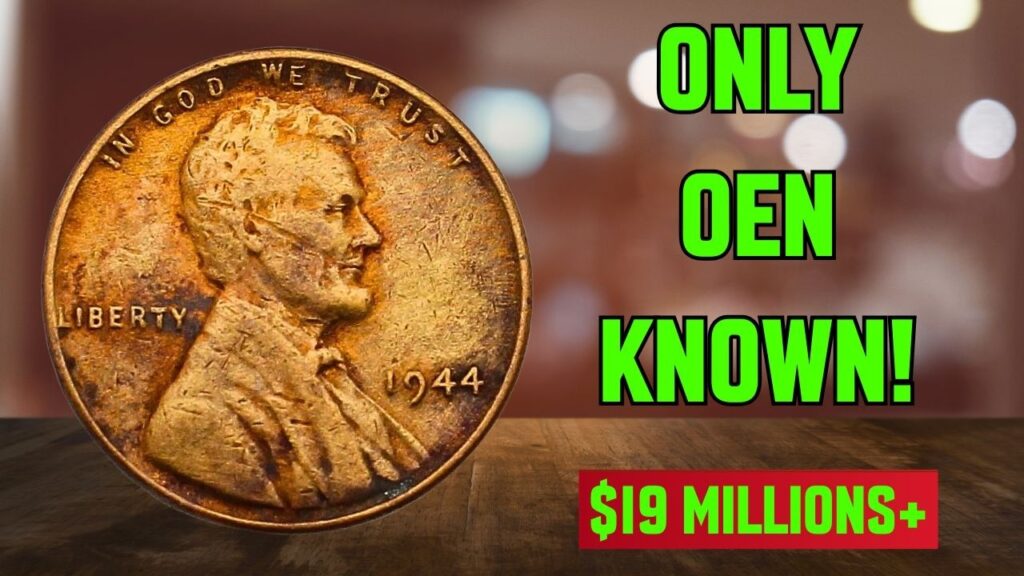
Penny Alert! The 1944
Imagine reaching into an old jar of pennies — the same jar you’ve ignored for years — and pulling out a single coin worth more than your car… maybe even more than your annual salary.
It sounds impossible.
But one version of the 1944 No Mint Mark Lincoln Wheat Penny has shocked collectors, shattered auction expectations, and turned ordinary Americans into unexpected winners.
Before you dismiss your pocket change again, read this carefully.
🏛️ The Wartime Story Behind the 1944 Penny
In 1944, the United States Mint was deep into World War II production demands.
- In 1943, pennies were struck in zinc-coated steel to conserve copper.
- In 1944, copper returned — primarily from recycled wartime shell casings.
That alone makes the 1944 penny historically significant.
But something extraordinary happened.
A few leftover 1943 steel planchets were accidentally struck with the 1944 design.
And that mistake created one of the most legendary transitional errors in American numismatics.
💎 The $1,000,000 Mistake: 1944 Steel Penny
Here’s where things become life-changing.
A genuine 1944 steel Lincoln cent:
- Looks silver (not copper)
- Sticks to a magnet
- Weighs about 2.7 grams
These coins were never supposed to exist.
When authenticated in high grade, some examples have:
- Sold for high six figures
- Approached $1,000,000 depending on condition
Auction rooms go silent when one appears.
Bidding wars erupt.
This is not hype — it’s documented auction history.
🪙 What About Regular 1944 No Mint Mark Copper Pennies?
The Philadelphia Mint struck 1944 pennies without a mint mark.
While millions were produced, very few survived in pristine condition.
High-grade examples graded MS66 or higher have:
- Sold for thousands of dollars
- Generated strong five-figure results when exceptional
Condition is everything.
Collectors between 30–65 are aggressively upgrading their registry sets, pushing demand higher for top-tier examples.
🔎 How to Identify a Valuable 1944 Penny
Here’s your checklist:
1️⃣ Check the Date
Look for 1944.
2️⃣ Look Under the Date
No mint mark = Philadelphia issue.
3️⃣ Magnet Test
- If it sticks → possible steel error
- If it does NOT stick → common copper version
4️⃣ Weigh the Coin
- Steel: ~2.7 grams
- Copper: ~3.11 grams
5️⃣ Examine Condition
- Strong luster
- Sharp wheat lines
- Minimal contact marks
Never clean the coin.
Cleaning destroys value instantly.
🏆 Why Authentication Is Non-Negotiable
Serious money only enters the picture after certification from:
- Professional Coin Grading Service
- Numismatic Guaranty Company
Without grading:
- Buyers hesitate
- Offers drop dramatically
With grading:
- Auction houses compete
- Private collectors bid aggressively
- Value multiplies
💰 Where to Sell for Maximum Profit
If you discover a rare example, avoid pawn shops.
Instead, research major auction platforms such as:
- Heritage Auctions
- Stack’s Bowers Galleries
Competition drives price.
Price creates wealth.
Many people lose thousands by selling too quickly to local buyers.
Strategy matters.
📈 Why Demand Remains Strong
Rare coin demand continues to rise because:
- Tangible historical assets hold long-term appeal
- Wealthy collectors view them as portable stores of value
- The supply of authenticated 1944 steel cents is microscopic
When supply is tiny and demand is global, prices respond aggressively.
🧭 The Hidden Opportunity Reminder
The 1944 No Mint Mark Lincoln Wheat Penny is more than copper or steel.
It represents:
- Awareness
- Education
- Strategic action
Before you scroll on your phone tonight…
Check your coin jars.
Look for 1944.
Test it with a magnet.
Because sometimes the smallest piece of history carries the biggest financial reward.

Leave a Reply