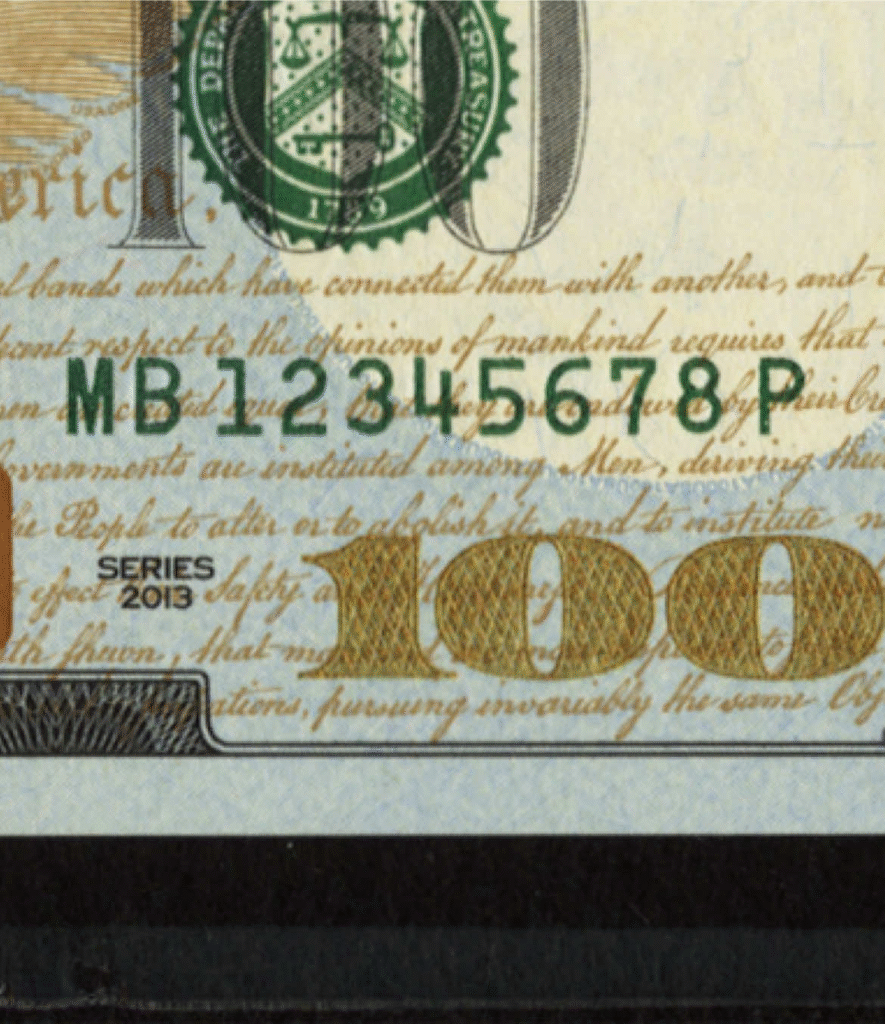
$1,500 Ladder Note Alert
Most people spend $100 bills without a second thought. But certain rare serial numbers can turn an ordinary banknote into a collector’s treasure worth $1,000 to $1,500 or more.
One of the most valuable patterns is called a “Ladder Note.” This guide explains exactly what it is, why collectors pay so much, and how to check your cash step-by-step. 👇
💎 Step 1: What Is a Ladder Note?
A Ladder Note is a banknote with a serial number that follows a perfect numerical sequence.
There are two main types:
- 🔼 Ascending ladder: 01234567
- 🔽 Descending ladder: 76543210
These patterns are extremely rare because they require a precise number sequence printed in exact order.
Because of their rarity and visual appeal, collectors are willing to pay large premiums.
💰 Step 2: Why a $100 Ladder Note Can Be Worth $1,500
Even though the bill’s face value is $100, collectors value ladder notes much higher due to three key factors:
1️⃣ Extreme Rarity
Only a tiny fraction of printed bills have perfect ladder serial numbers.
2️⃣ Strong Collector Demand
Paper money collectors actively search for special serial numbers like ladders, repeaters, and solids.
3️⃣ Condition Matters
- 🟢 Crisp, uncirculated bills bring the highest value
- 🟡 Used bills still have strong value
- 🔴 Damaged bills may reduce value
Certified notes graded by Paper Money Guaranty (PMG) or Professional Coin Grading Service (PCGS) often sell for the highest prices.
🔍 Step 3: How to Check Your $100 Bill (Easy Identification Guide)
Follow these simple steps:
👀 Look at the Serial Number
The serial number is printed twice on the front of the bill.
Check if the numbers form a perfect sequence like:
- 01234567 ✅
- 12345678 ✅
- 76543210 ✅
If yes, you may have a ladder note.
📊 Confirm the Pattern Is Perfect
To qualify as a true ladder note:
- ✔ All digits must be in exact order
- ✔ No skipped or repeated numbers
- ✔ Sequence must be continuous
Even one incorrect digit reduces the value significantly.
📦 Check the Bill’s Condition
Higher condition equals higher value.
Best condition examples include:
- Crisp paper
- No folds
- No stains
- Sharp corners
🏦 Step 4: Estimated Ladder Note Values
Here’s a general value guide:
| Condition | Estimated Value |
|---|---|
| Circulated | $300 – $800 |
| Lightly used | $800 – $1,200 |
| Uncirculated | $1,000 – $1,500+ |
| Certified high grade | $1,500 – $3,000+ |
Perfect ladder notes in pristine condition bring the highest premiums.
🧭 Step 5: Where You Might Find Ladder Notes
These valuable notes can still appear in everyday places:
- 💵 Cash withdrawals from banks
- 🏦 ATM machines
- 📦 Old saved cash collections
- 🪙 Estate collections
- 💼 Business cash storage
Many people overlook serial numbers completely.
🛡️ Step 6: What To Do If You Find One
If you discover a ladder note, follow these steps immediately:
✔ Protect the Bill
- Store in a protective sleeve
- Keep it flat
- Avoid folding or handling excessively
✔ Get Professional Grading
Certification increases value and confirms authenticity.
✔ Sell Through Trusted Platforms
Auction houses and collectors pay premium prices for certified notes.
📈 Collector Insight: Why Ladder Notes Are So Valuable
Ladder notes represent one of the most visually appealing and rare serial number patterns in paper money collecting. Because they occur so rarely, demand remains strong among collectors worldwide.
As more collectors enter the hobby, the value of premium serial number notes continues to rise.
Checking your cash carefully could reveal hidden value you never expected. A simple serial number might turn your ordinary $100 bill into a four-figure collectible. 💰

Leave a Reply